
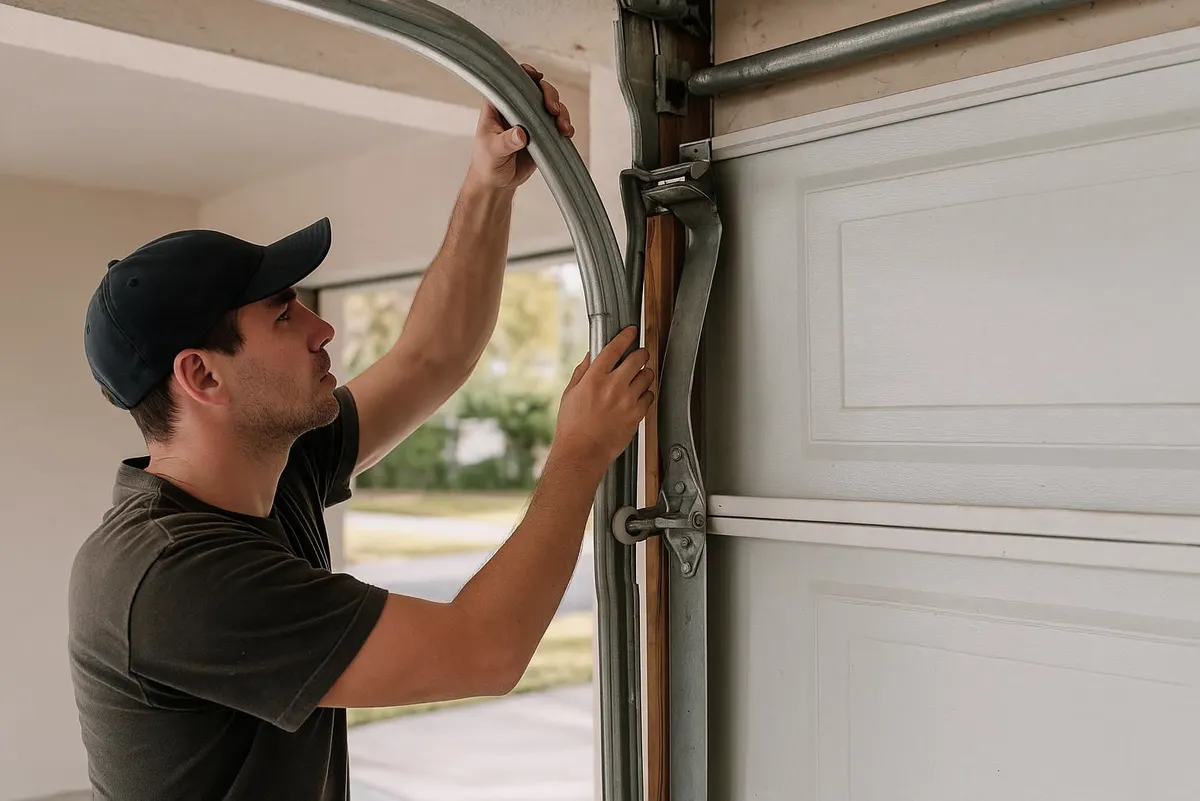
Use a lithium-based grease or a silicone spray lubricant made specifically for garage doors on the hinges, rollers, and springs twice a year. Skip WD-40, motor oil, and household grease — they either evaporate too fast or gum up with grit, and both problems show up faster here than almost anywhere else in Florida.
Why This Matters More in Putnam County
Garage door hardware in this part of the state takes a beating from conditions most manufacturers never tested for. Humidity keeps metal parts damp even when it hasn't rained in days. Afternoon downpours during storm season push moisture into tracks and hinge pins. And if you're closer to the river or the coast, salt air accelerates corrosion on springs, rollers, and bolts. Add in wood or steel panels that swell slightly in the heat, and you get doors that bind, squeak, or stick at the exact moment you need them to open smoothly.
Lubrication won't stop rust on its own, but the right product creates a barrier that sheds moisture instead of holding it against bare metal.
Tools and Products You'll Need
- Lithium grease or silicone-based garage door lubricant (spray can with a straw nozzle works best)
- Clean, dry shop rags
- A soft brush or old toothbrush for caked-on grit
- Work gloves and safety glasses
- A sturdy ladder
Avoid: WD-40 (it's a solvent and degreaser, not a lubricant — it strips old grease and leaves parts drier within weeks), petroleum jelly, standard axle grease, and cooking oils. All of them either attract dust and pollen or break down fast in heat and humidity.
Step-by-Step: How to Lubricate Your Garage Door
- Close the door and disconnect the opener. Pull the manual release cord so you can move the door by hand without the motor engaging.
- Wipe down the tracks. Use a dry rag to remove dust, pollen, and any rust flakes. Do not lubricate the tracks themselves — lubricant on the track surface attracts grime and can make the rollers slip.
- Lubricate the hinges. Spray a light coat at each pivot point where the hinge meets the panel. Work the door up and down a few times by hand to let it soak in.
- Lubricate the rollers. Aim for the bearings at the center of the wheel, not the roller surface itself. Nylon rollers don't need lubricant on the wheel face; steel rollers benefit from a light coat at the stem.
- Apply a light coat to the torsion spring. A thin layer of lubricant reduces friction and slows rust, but this is the one place to go easy — too much attracts dust that can build up and interfere with coil movement.
- Lubricate the opener's chain or screw-drive rail according to the manufacturer's manual. Most openers specify a particular lubricant type.
- Check and lubricate the lock mechanism if your door has a manual slide lock, since these tend to seize up first in humid conditions.
- Wipe off excess lubricant with a clean rag so it doesn't drip onto the floor or attract dirt.
- Run the door through a full open-close cycle two or three times, listening for grinding, popping, or uneven movement.
What a Homeowner Can Safely Do
Everything above — hinges, rollers, chain, lock, and a light touch on the spring coils — is reasonable DIY maintenance. It takes about 20 minutes twice a year and goes a long way toward preventing the squeaks and stiffness that show up after a wet summer.
What Needs a Technician
If you spot frayed cable strands, a spring with visible gaps or rust pitting, a bent track, or a roller that's cracked rather than just dirty, stop there. Springs are under heavy tension and cables carry the full weight of the door — adjusting, replacing, or even repositioning them without the right tools is how people get hurt. Persistent grinding after lubrication usually means a worn part needs replacing, not more grease.
When to Call Pomona Park Garage Door Service
If your door still binds, sags, or makes noise after a proper lubrication pass, that's a sign of a mechanical issue rather than a maintenance gap. We offer Garage Door Maintenance & Tune-Up visits that cover full hardware inspection, track alignment, and balance testing, plus Cable & Roller Replacement when parts have corroded past the point lubricant can help. We'll tell you honestly whether it's a quick fix or something more.
Ready for a professional tune-up before the next round of Putnam County humidity sets in? Call Pomona Park Garage Door Service today — proudly serving Pomona Park, Crescent City, Satsuma, Welaka, San Mateo, East Palatka, Palatka, and Interlachen.