
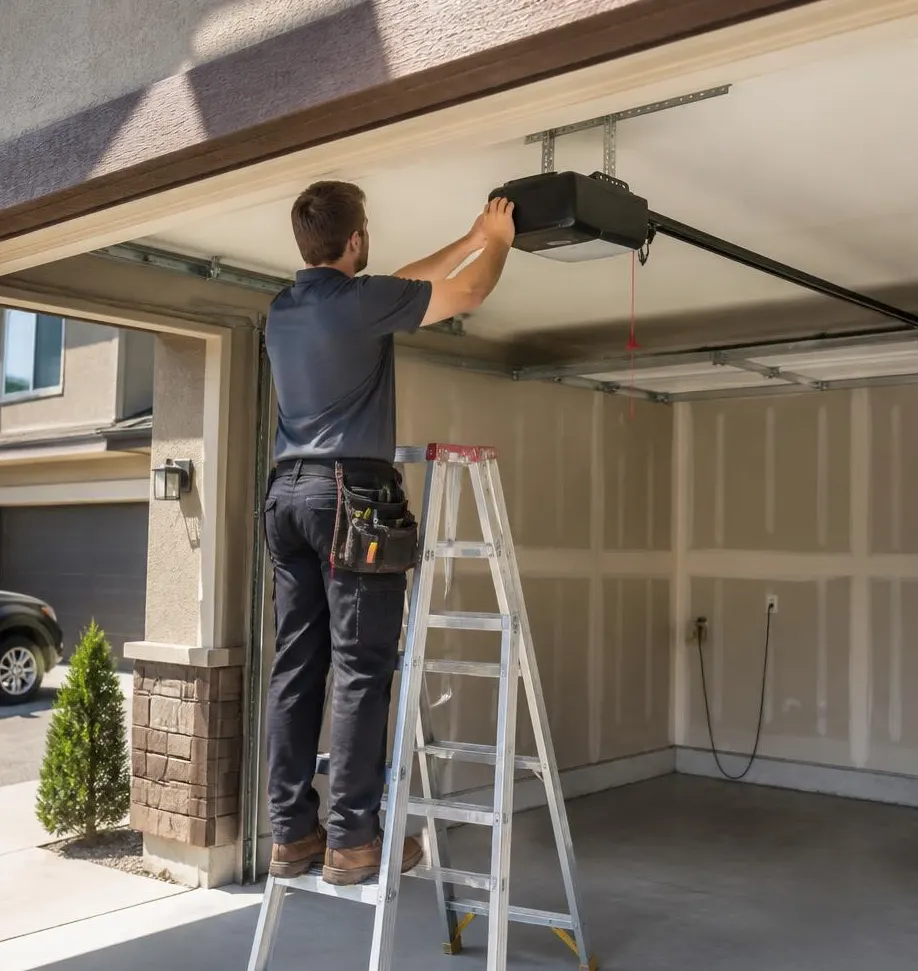
Storm-Proofing Your Garage Door Before the Next US-17 Squall Line
Rule of thumb: if your garage door hasn't been inspected since it was installed, assume it isn't ready for 100+ mph gusts. The exceptions are doors with a documented wind-load rating installed in the last few years, doors with factory-reinforced struts already bolted to the panels, and doors on garages with recent impact-rated replacement. Everyone else should plan on a real inspection before the next named storm works its way up from the Gulf or off the Atlantic.
Why the Garage Door Is the Weakest Wall in the House
A garage door is the largest opening in most homes, and it's built from lighter material than the walls around it. When wind hits a house, pressure builds on the windward side and drops on the leeward side. If the garage door buckles inward or blows out, that pressure difference suddenly has a clear path inside the structure. The roof can start to lift from underneath, and what would have been a shingle problem becomes a full roof-loss problem. This is why wind-load engineering for garage doors focuses as much on keeping the door in its tracks as on the panels themselves.
Signs Your Door Won't Hold Up This Storm Season
- Rust at the track brackets or bottom corners — common after a summer of humidity and afternoon downpours, especially on doors that sit low near grade.
- Panels that flex or oil-can when you push on them — a sign the reinforcement struts are missing, undersized, or corroded.
- Rollers that wobble in the track or cables with visible fraying — these are often the first thing to give out under repeated wind gusts, not the panels themselves.
- A torsion spring that looks stretched, has a visible gap when the door is down, or makes a popping sound — a failing spring changes how much load the rest of the hardware is carrying.
- Swollen wood trim or a door that drags against the weatherstrip — moisture absorption changes the fit and can keep the door from sealing or closing fully.
What to Do Before the Next Storm
- Check the track-to-wall lag screws. Humidity and seasonal temperature swings loosen fasteners over time. Tracks that flex away from the wall under wind load are a leading cause of doors coming off their rollers.
- Replace worn rollers and frayed cables now, not during the storm watch. Nylon rollers with sealed bearings hold up better in humid, salt-influenced air than older steel rollers, which rust and bind.
- Test the auto-reverse safety feature on your opener. It's not a wind feature directly, but it tells you whether the opener's force settings and sensors are working correctly, which matters when wind is pushing back against the door as it closes.
- Look at the horizontal struts on the back of each panel. If your door doesn't have them, or they're sized for a mild climate rather than wind-load conditions, this is the single most cost-effective upgrade for storm resistance.
- Consider your door's age against current wind-load expectations. Older doors built before wind-load codes tightened up often weren't engineered for sustained hurricane-force gusts, even if they've held up fine in regular storms so far.
Ongoing Habits for a Hot, Humid Climate
Lubricate rollers, hinges, and the torsion spring every few months with a garage-door-specific lubricant, not household oil, which attracts grit. Wipe down tracks after heavy rain to keep standing moisture from sitting on bare metal. If you're closer to the river or coastal air moves through on an east wind, rinse salt residue off metal hardware when you notice a white film forming, since that accelerates rust far faster than humidity alone.
When to Call Pomona Park Garage Door Service
If you've found rust on the tracks, a spring that looks stretched, or a door that feels loose in its frame, that's past the point of a DIY fix. We handle Garage Door Maintenance & Tune-Up visits that catch these issues before storm season peaks, and Cable & Roller Replacement when the hardware carrying the load is worn out. If your door is older and wasn't built with current wind-load standards in mind, we can also talk through a Garage Door Installation & Replacement that's rated for what this part of Florida actually throws at it. We serve homes and businesses along US-17 in Pomona Park, plus Crescent City, Satsuma, Welaka, San Mateo, East Palatka, Palatka, and Interlachen.
Call Pomona Park Garage Door Service today to get your door checked before the next storm system moves through Putnam County.